Choose IT support for law firms by comparing documented responsibilities, legal software experience, security evidence and recovery commitments. A fast help desk is useful, but its response time does not establish whether the provider can restore a document system before a filing deadline.
The distinction is accountability: someone must own the incident even when several suppliers are involved. Start with the service scope, then examine the evidence behind each commitment.
Key Takeaways
- Compare written service scopes, exclusions and supplier responsibilities across support, security, cloud services, backup, Microsoft 365 and legal software.
- Check references and experience with the firm’s actual practice and document-management applications, including how the provider coordinates with software vendors.
- Request evidence of security controls, access reviews, patching, incident responsibilities and successful recovery tests. Outsourcing administration doesn’t transfer the firm’s responsibilities.
- Define SLA stages, uptime measurements, recovery objectives and urgent-incident ownership. Confirm pricing, handover and exit responsibilities before committing.
What should IT support for law firms include?
A complete service should cover routine operations, user support, security and recovery. Buying these separately can work, but responsibilities must remain clear wherever suppliers share access or depend on each other.
Use these categories to compare proposals.
| Service category | What the scope should establish |
|---|---|
| Managed IT services | Monitoring, maintenance, patching, asset records and reporting. |
| Help desk and technical support | Supported users, devices, hours, locations and escalation routes. |
| Cybersecurity | Endpoint protection, email security, identity controls, monitoring and training. |
| Cloud services and hosting | Platform management, secure remote access and supplier responsibilities. |
| Backup and disaster recovery | Protected systems, retention, restoration testing and recovery objectives. |
| Microsoft 365 management | Licensing, tenant configuration, access, email and collaboration services. |
| Legal software support | Application knowledge, integrations and coordination with software vendors. |
An omitted category remains an operational responsibility, even when it falls outside the monthly fee. Our IT support and technology services cover several of these areas; the contract should define which apply to the firm.
What evidence demonstrates experience in the legal sector?
How many comparable practices does the provider support?
Request references from practices with similar applications, working arrangements and operational dependencies. Experience supporting a conveyancing practice may not translate directly to a litigation team using different document and case-management systems.
Uptime Legal suggests that fewer than 20 real law firm clients usually indicates surface-level legal experience. Treat that as its screening benchmark, not an accreditation standard. Client numbers alone don’t establish technical competence, service quality or familiarity with the firm’s software.
Does that experience include the actual applications?
Ask whether the provider’s engineers offer relevant legal software support and hold relevant certifications, where available. Check for experience with Clio, PCLaw, Time Matters or the firm’s chosen practice management software.
Document management also matters. NetDocuments and iManage permissions, Microsoft 365 integrations and remote access dependencies can create problems beyond the application itself.
Request an explanation of a typical escalation process, including the boundary between the IT provider and software vendor. A provider can understand legal workflows without being authorised to modify every application configuration.
How will client information be protected?
Which controls are included and maintained?
The cyber security baseline should include endpoint protection, email filtering, multi-factor authentication (MFA), identity and access management, encryption, threat monitoring and security awareness training to protect sensitive client data. Identify who reviews alerts and who can isolate devices or disable compromised accounts.
Reliable Technology recommends weekly security-log reviews, monthly vulnerability scans, quarterly recovery tests and patching within days of updates. These are operational recommendations, not regulatory deadlines. High-risk vulnerabilities may require faster action, while automated monitoring shouldn’t depend on a weekly review.
The ABA’s 2023 Cybersecurity TechReport reported that 29% of respondents’ firms had experienced a security breach. This is historical US survey evidence, not a current UK breach rate.
What evidence supports cyber security, confidentiality and compliance?
The SRA’s cybersecurity advice calls for a tailored security policy. Its remit covers England and Wales; firms elsewhere should apply their own regulator’s requirements.
The ICO’s data security guidance explains the UK GDPR requirement for appropriate technical and organisational measures. Outsourcing administration doesn’t transfer the firm’s responsibilities.
Require access-review records, patch reports, recovery-test results, processor terms and documented incident responsibilities. These provide evidence for governance, compliance and cyber insurance questionnaires; a product list doesn’t.
For sharing sensitive client data, specify encrypted portals, expiring secure links, MFA and automatic upload or download notifications. Notifications provide visibility, but they don’t prevent an authorised recipient from mishandling downloaded material.
If you suspect a data breach, isolate affected accounts or devices and follow the agreed incident plan.
What do response and recovery commitments mean?
What does the service level agreement promise?
A service level agreement (SLA) should distinguish acknowledgement, technical engagement, workaround and resolution. An automated ticket receipt should not count as an engineer starting work.
Synergy Technical recommends initial responses measured in minutes for critical incidents and a few hours for minor issues, with tiered resolution commitments. These are examples for negotiation, not universal standards.
Its example of 99.9% uptime also needs a defined measurement period, covered systems, exclusions and planned-maintenance notification. Availability for a hosting platform does not establish availability for the entire legal workflow.
What can actually be restored?
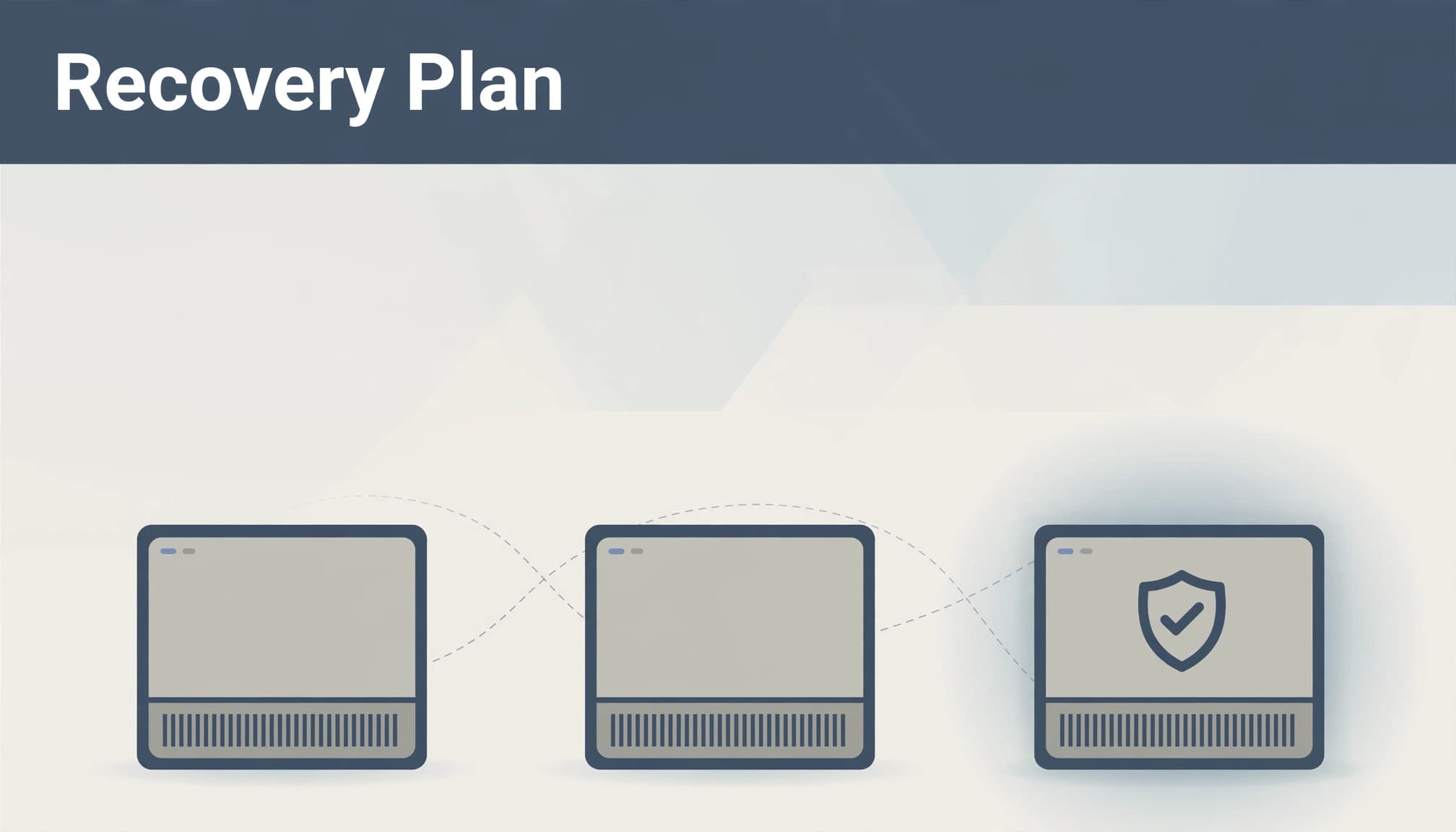
Document backup frequency, retention and recovery time objectives (RTOs), meaning the intended time to restore service. Define recovery point objectives (RPOs) too: how much recent data the firm could lose.
A synchronised copy can reproduce a deletion, ransomware-encrypted file or configuration error. Synchronisation alone does not establish recoverability.
Require independent recovery arrangements and evidence of successful restoration, including permissions and application dependencies. A restored file is not sufficient if staff still cannot open the matter.
Our business continuity and recovery support can help connect technical restoration with essential operations. Recovery priorities should reflect filing, hearing and billing dependencies, rather than treating every system equally.
Who owns an urgent legal software incident?
The IT provider should retain ownership of coordination when an incident crosses application, Microsoft 365, permissions, hosting, device or vendor boundaries. Uptime Legal identifies these overlapping dependencies as common in legal software support.
For an imminent filing or hearing deadline, the escalation route should record the affected users, matter-critical function, deadline and available workaround. It should identify a technical lead, a telephone escalation route and an agreed update frequency.
The provider should gather error details, establish whether the issue is local or widespread, and involve the application vendor with usable diagnostic information. Passing the firm’s message to another supplier isn’t sufficient coordination.
Define this boundary alongside hardware and software support. The agreed scope for legal software support should define how the provider coordinates with application vendors. Vendors may control product defects, while the IT provider manages communication, infrastructure diagnostics and restoration work.
What does the price include, and how will handover work?
Compare the chargeable scope
Synergy Technical describes fixed, usage-based and per-user pricing. Netcentrix offers per-named-user pricing and a free Microsoft Secure Score audit. Neither a pricing unit nor an initial audit establishes the ongoing service scope.
Compare Microsoft licences, security tools, backup storage, onsite attendance, out-of-hours support, onboarding and project work separately. State whether new starters, departing staff and additional devices change the charge.
Microsoft Secure Score measures supported configuration recommendations. It does not certify compliance or demonstrate that recovery works.
Establish ownership before changing providers
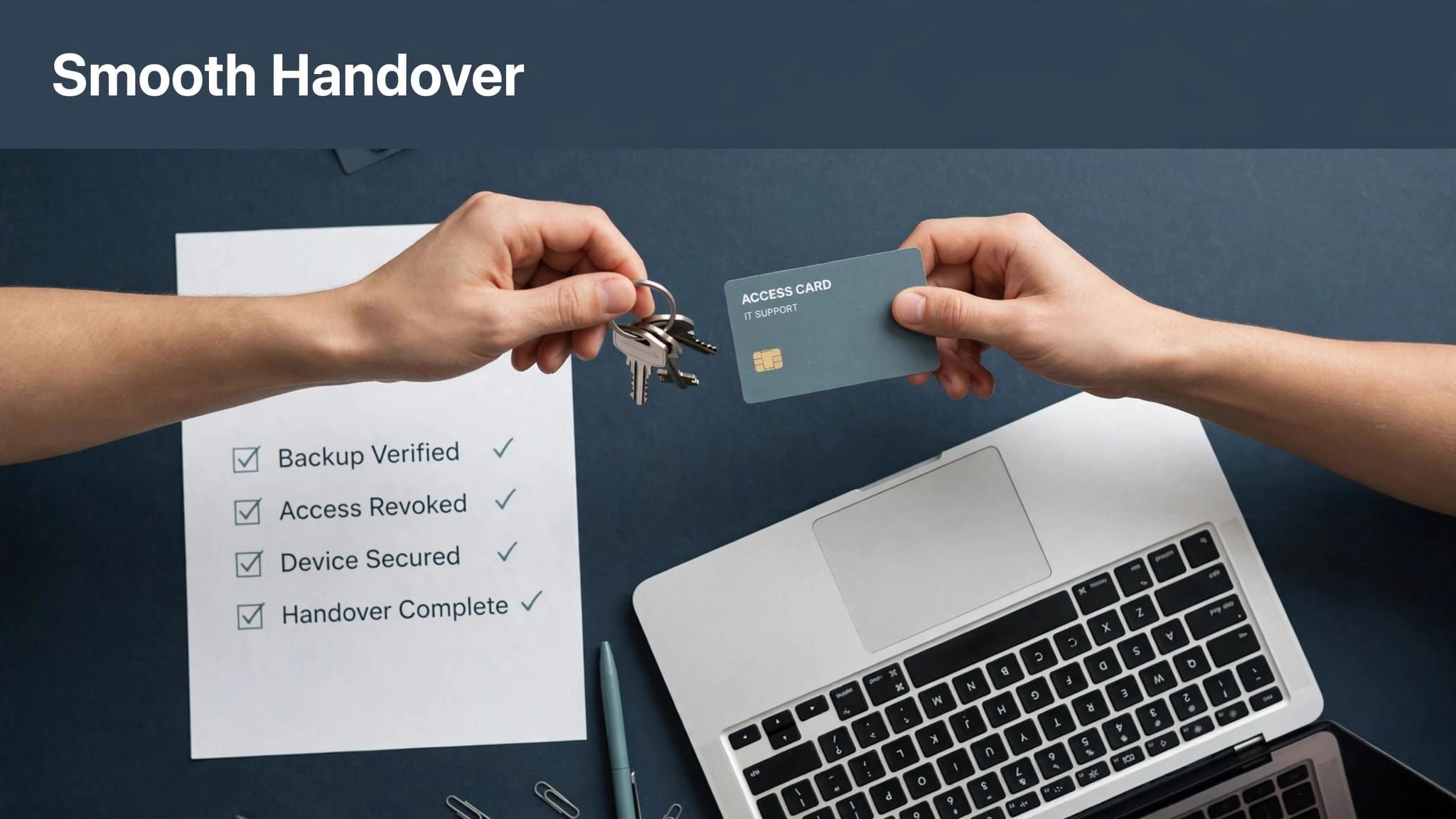
The handover plan should cover administrator access, Microsoft tenant ownership, domains, application contacts, backup repositories, asset records and support documentation. Define who removes the outgoing provider’s access and who remains responsible during any overlap.
Our IT consulting services can help establish priorities and supplier responsibilities before a change.
For practices with offices across borders, scope European IT support around working hours, local attendance and shared systems. A London support window may leave overseas users without timely assistance.
A practical checklist for the final decision
Compare written evidence rather than the number of features in a proposal. A provider should be able to explain the boundaries of its service as clearly as its capabilities.
- Record the firm’s critical applications, deadlines, locations and existing supplier responsibilities.
- Compare shortlisted providers against the same service scope, exclusions and application requirements.
- Review references, sample reports, recovery-test evidence and proposed escalation arrangements.
- Agree commercial terms, ownership, handover responsibilities and exit arrangements before committing.
Keep unresolved exclusions visible in the decision record. A lower fee may be reasonable when the firm retains capable internal resources; the same exclusion creates a gap when nobody owns the work.
Frequently asked questions
What is the difference between IT services and IT support?
IT services include planning, implementation, hosting, security and ongoing management. IT support normally describes assistance with technical problems and user requests.
The terms overlap commercially. The written scope establishes whether maintenance, security monitoring and improvement work are included or charged separately.
Are managed services preferable to break-fix support?
Managed services provide ongoing administration and monitoring under an agreed scope. Break-fix support normally addresses faults when they occur, often through hourly or incident charges.
Break-fix arrangements can suit limited requirements, but they do not automatically assign responsibility for patching, access reviews or backup testing. Those tasks still need an owner.
Can a generalist provider support a law firm?
Yes, provided it has relevant application knowledge, suitable security controls and clear vendor escalation arrangements. A legal-specialist label does not establish those capabilities.
The decision should rest on evidence of comparable work and documented responsibilities, rather than sector branding alone.
Choose documented responsibility over broad promises
Effective IT support for law firms depends on clear ownership, supported by security records, meaningful service commitments and demonstrated recovery. A broad package leaves gaps when nobody is responsible for the dependencies between systems.
Speak to our team about IT support, consultancy, cyber security and Microsoft cloud services built around your firm’s applications and operational requirements.